

Dr. Hüseyin Kâmi BÜYÜKÖZER
Thinking that Ramadan will remind us of our responsibility to eat halal food, a responsibility that people have neglected for 100 years due to the imposition of non-Muslim lifestyles on Muslims, and with the aim of contributing to the halalization of our lives by clinging to the rope of Allah together, we, as GIMDES, Dunya Halal Foundation, Daru’l Halal Madrasah, Halal Dunya Markets UNION, and WHC Institutions, will carry out the Ramadan and 17 Ramadan World Halal Day events this year with the participation of all our volunteers.
Ramadan is the month of gratitude. Ramadan is the month of finding the truth. Ramadan is the month of repentance.
Ramadan is the month that contains the Night of Power, which is better than a thousand months.
Thus, by instilling the consciousness of social solidarity and sharing, and in a sense by providing “willpower training,” it gives believers character and shows the way to becoming a “perfect believer.”
“O believers! Fasting is prescribed for you—as it was for those before you1—so perhaps you will become mindful ˹of Allah˺. ˹Fast a˺ prescribed number of days.1 But whoever of you is ill or on a journey, then ˹let them fast˺ an equal number of days ˹after Ramaḍân˺. For those who can only fast with extreme difficulty,2 compensation can be made by feeding a needy person ˹for every day not fasted˺. But whoever volunteers to give more, it is better for them. And to fast is better for you, if only you knew. Ramaḍân is the month in which the Quran was revealed as a guide for humanity with clear proofs of guidance and the decisive authority. So whoever is present this month, let them fast. But whoever is ill or on a journey, then ˹let them fast˺ an equal number of days ˹after Ramaḍân˺. Allah intends ease for you, not hardship, so that you may complete the prescribed period and proclaim the greatness of Allah for guiding you, and perhaps you will be grateful.” (Surah Al-Baqara, 183-185)
With this awareness and enthusiasm, we wanted to draw attention to the meat and meat-derived additives that are most likely to contaminate our Iftar meals on this day.
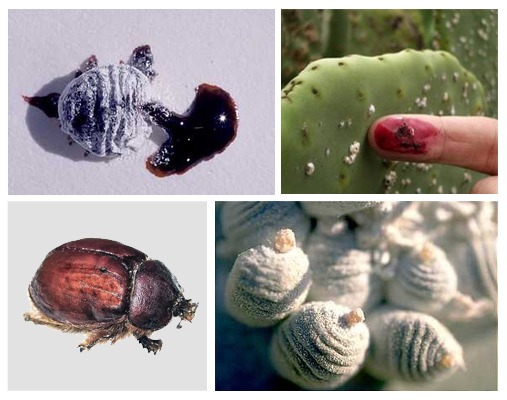
Recently, the claim that protein, a basic human need, is no longer available from known sources due to population growth, and that this need is being met by obtaining it from insects and laboratory-produced substances, has created unease and concern in Muslim societies through Western publications and practices. GIMDES has shared its scientific studies on this subject with the public since its establishment.
The aspect we will examine regarding insects and artificial protein is whether the addition of substances derived from them to food products is permissible according to Islamic law.
As understood from the aforementioned sources, eating insects is forbidden. The consumption and sale of insect protein are not considered permissible in the Hanbali school of thought.
It has also been stated that selling insects is forbidden because no benefit can be derived from it.
In conclusion, while the consumption of the insect and artificial meat in question, or their use as additives in food products, is not permissible according to the Hanafi and Shafi’i schools of thought, their buying and selling in the food sector is also forbidden. In the Maliki school, killing the insect is permissible only if done according to Islamic principles, meaning with intention and the recitation of Bismillah (in the name of Allah). Otherwise, it is not permissible. The Hanbali school shares the same view as the Hanafi and Shafi’i schools regarding the consumption and sale of insects, deeming them impermissible.
In light of these four schools of Islamic thought, and considering the diverse geographical distribution of the world’s population and the necessity for institutions and organizations producing halal and tayyib (pure and wholesome) products to engage in economic production, it has been deemed appropriate for the well-being of the Ummah (Muslim community) that all insects, along with their proteins, dyes, and other materials, be treated as haram (forbidden).
Only Allah Almighty knows what is truly right.