
Dr. Hüseyin Kâmi Büyüközer – Menaf Yıldız
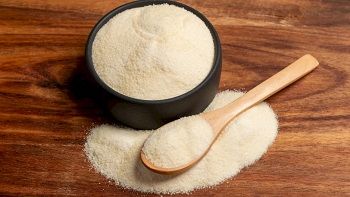
Gelatin, one of the sore spots for Muslims, is an additive widely used in children’s favorite jelly candies, sweets, desserts, yogurt, medicine capsules, creams, many cosmetic products, and the pharmaceutical industry. It is an amino acid typically produced from the skin, bones, and cartilage of animals such as cattle, pigs, or fish; it is also a highly beneficial protein that supports tissue repair, bone and joint health, and contributes to muscle development.
Although it is beneficial from a health perspective, unfortunately, pork still dominates as the primary source of gelatin production worldwide; even when derived from cattle, a significant portion comes from parts that do not meet halal standards. For this reason, as GİMDES, we have been emphasizing for years on our official websites, in our official journals, and in the books we publish that this is a product consumers should be mindful of due to religious sensitivities; we have carried out awareness campaigns to educate the public on this issue.
A Search That Spanned Years
On our return trip from Bangkok in 2008, where we had attended the Halal Food Conference, we received some good news: an application had been submitted stating that gelatin would be produced in Turkey for the first time under halal and tayyib conditions. Unfortunately, 100% halal traceability could not be ensured for the raw materials, and GİMDES was unable to issue the requested certification. In the years that followed, other companies that applied were also unable to obtain certification because they could not ensure traceability of the raw materials.
As a result of GİMDES’s efforts — which have for years pioneered the production of many critical raw materials for halal food under halal conditions — Gerede Jelatin was able to carry out the first batch-based production of gelatin.
Every Stage of Production Was Inspected On-Site
Inspectors sent by GİMDES were present on-site from start to finish throughout the entire production process — from the inspection of slaughterhouses to the processing of hides at the tannery, from the curing of hides in lime pits to the production of gelatin from the cured hides — to oversee the control and traceability of the product’s raw materials and inputs. As a result of this inspection, praise be to Allah, the first batch of GİMDES-certified gelatin was successfully produced.
This historic step demonstrated that, while traceability in gelatin production may be challenging, it is not an insurmountable task if care is taken and efforts are made. It has instilled in our hearts the hope that, insha’Allah, if companies strive to ensure the traceability and sustainability of halal gelatin in the future, full-time certification may also be granted. We hope that the halal steps taken today with good intentions will bear fruit tomorrow.
We congratulate the Gerede Gelatin family and our inspection team, who worked diligently from start to finish on this blessed production, and we pray to our Lord that their efforts may become a continuous act of charity.
Leading the Way
As it has done before, GİMDES has taken the lead in this endeavor by demonstrating that this product can also be produced under halal and tayyib conditions. To date, we have certified more than 17,000 products.
We hope that these important steps taken to promote the concept of halal and tayyib production will serve as an example for both producers and consumers. GİMDES will continue its inspection and certification efforts with determination, biiznillah, to ensure the widespread adoption of reliable, traceable, and halal-tayyib production.
“When they enter Paradise, they will say, ‘Praise be to Allah, who has removed all sorrow from us! Indeed, our Lord is truly the Most Forgiving (Gafûr), the Most Grateful (Şekûr).'”
(Surah Fatir, 34)